March is a dynamic month full of action and change as the rains transform the landscape into a green paradise. Both the calving and whale shark seasons draw to a close as the rainfall increases. In early March you can run the Kilimanjaro Marathon or climb the mountain itself. There is also an abundance of birds. Many can be seen in their vibrant breeding plumage, and their mating calls can be heard.
For travelers who don’t mind the rain, March offers incredible photography and birding opportunities and fewer crowds with a more personal safari experience.
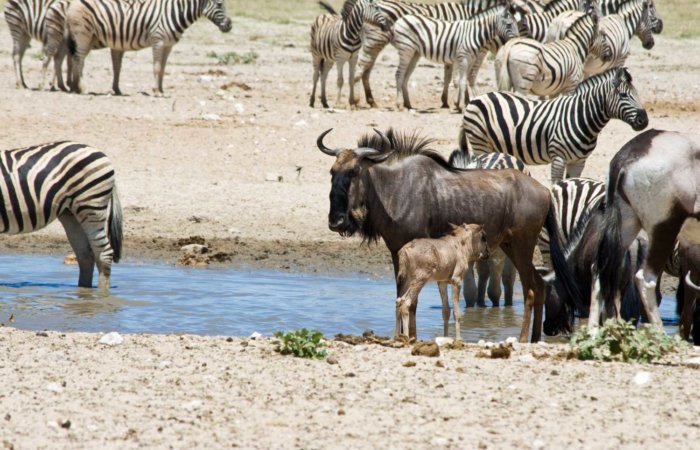
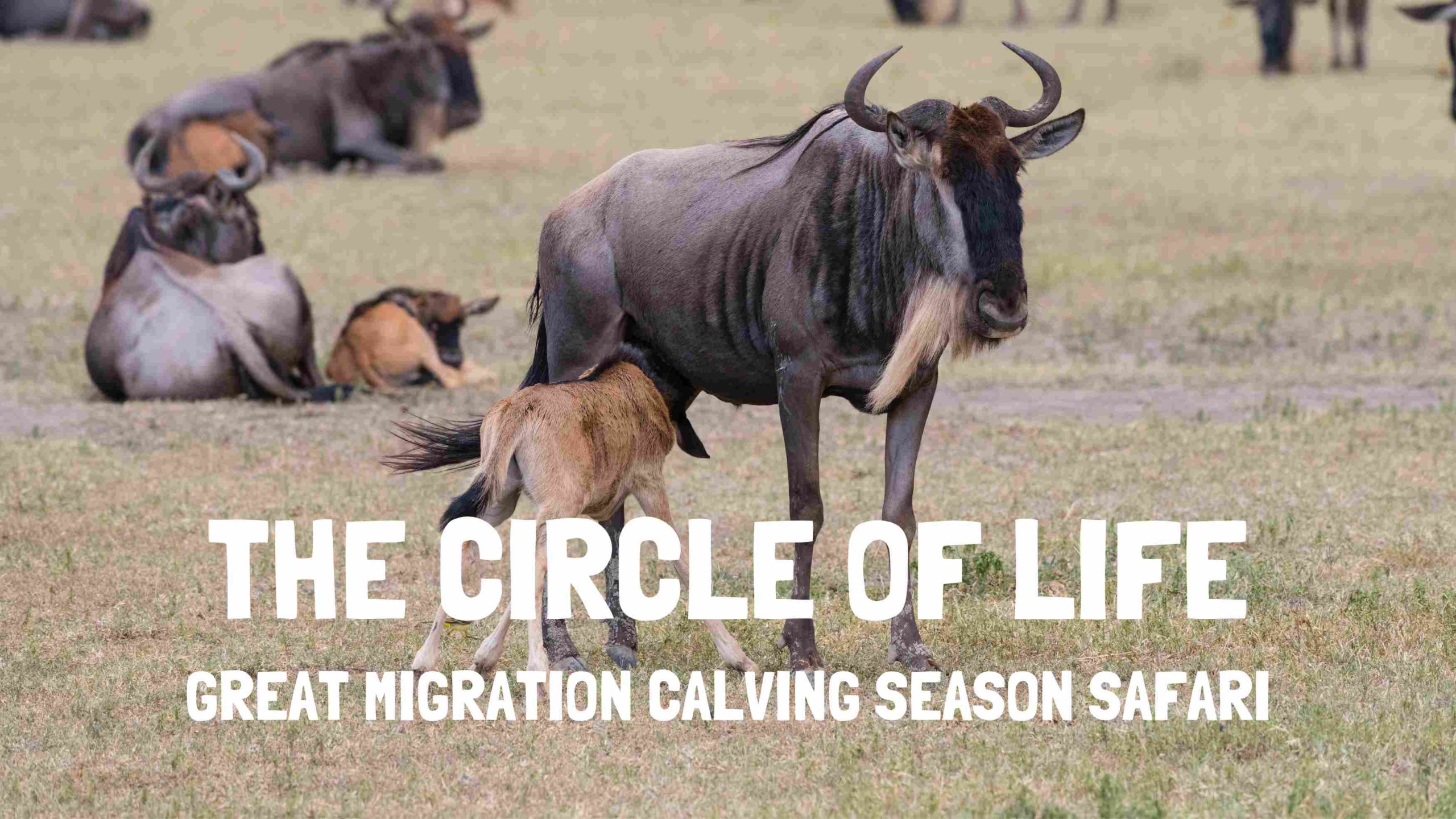
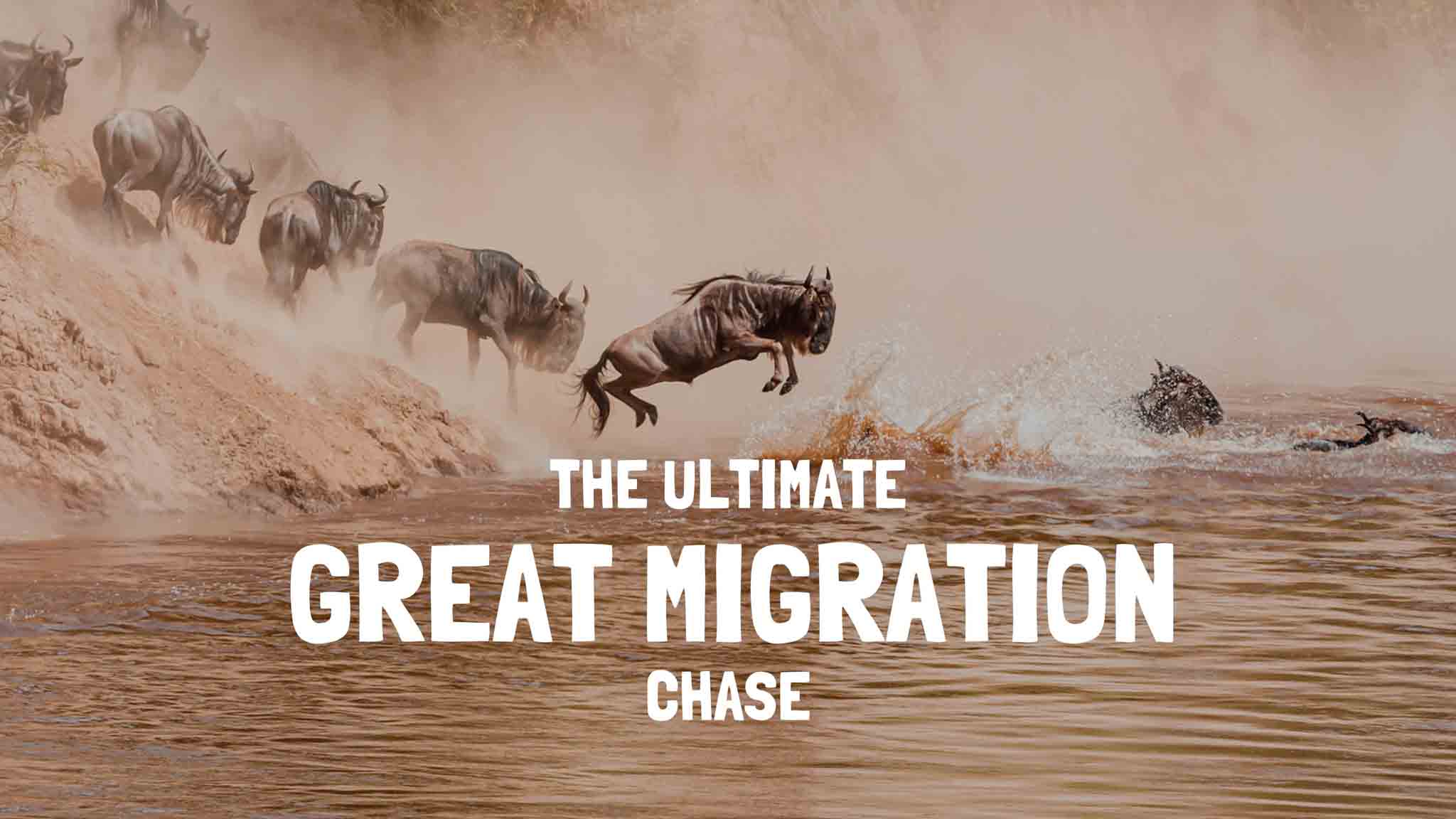
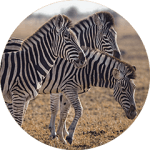
Every year, over 2 million wildebeests walk from the southern Serengeti to the Maasai Mara in Kenya and back down again, following the rains in search of food. The main events during this trek, the great migration, are the Mara River crossings in July and October and the calving season from December until mid-March. Hundreds of thousands of wildebeests, along with zebras and gazelles, are born during this period.
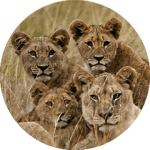
In March, the great migration moves from the Ndutu area in the south to the central Serengeti as the calving season draws to a close. If you want to see the peak, it is best to visit at the end of January or in February. However, you will still be able to see exciting predator action as they try to catch the newborns.
You can learn more about the migration here.
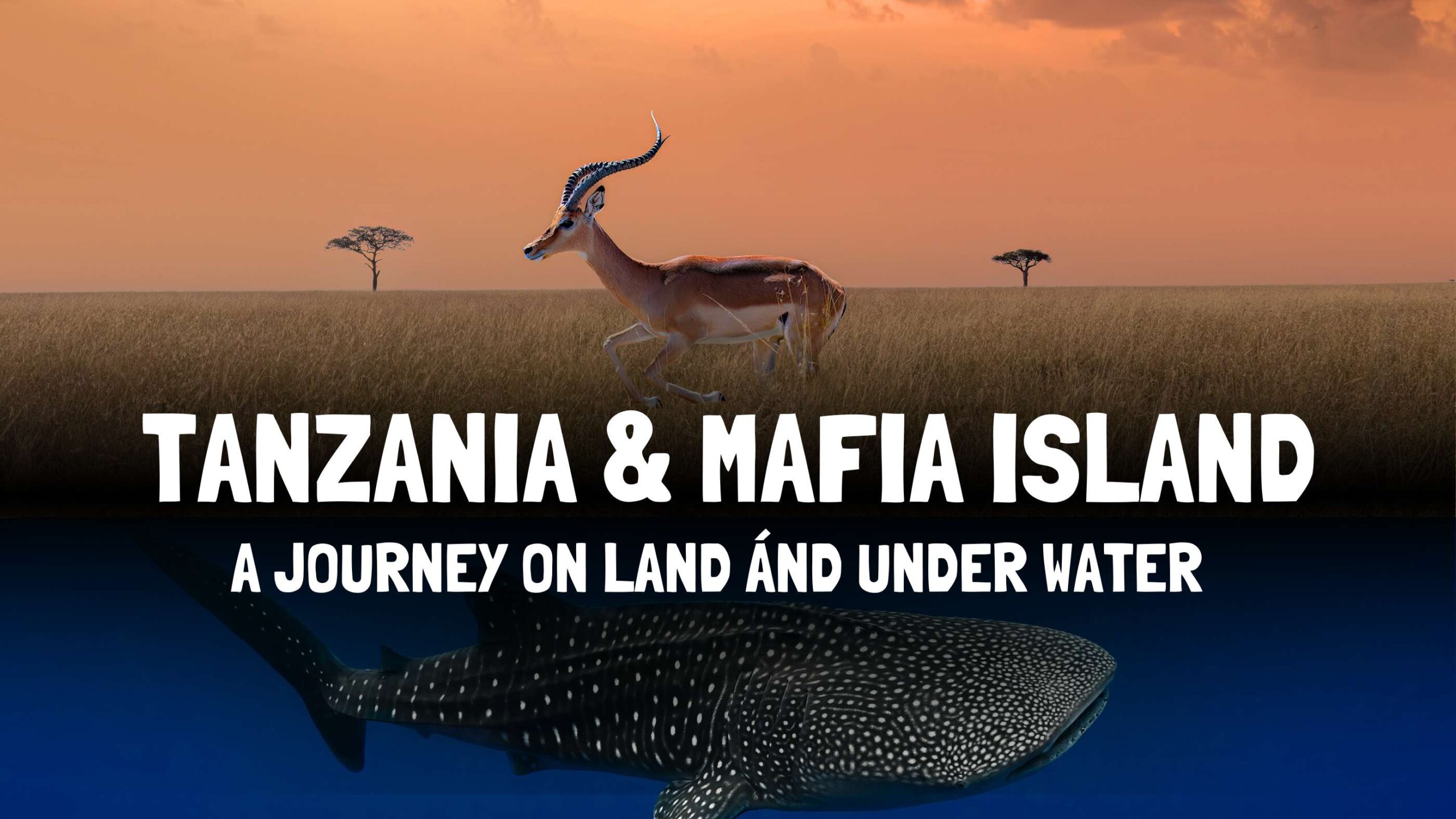
Along the coast it is humid, and temperatures are warm. Since diving visibility begins to drop, we recommend adding an island tour or spice tour to your trip, especially since cardamom harvesting can be seen in March. You can also catch the tail end of the whale shark season to snorkel with these gentle giants before they depart from Mafia Island. They visit these waters on their yearly migration in search of food, particularly plankton.
Join the Kilimanjaro Marathon, one of Tanzania’s most exciting annual events! It is named after the famous mountain because it takes place at its base. It is possible to run a full or half marathon or partake in a 5-kilometer fun run. Charities, mainly regarding cancer treatments and nature preservation, are supported with the proceeds of this event.
The marathon takes place in February or early March.
March is an amazing month to go birdwatching. Experience peak bird activity with migrants present, particularly from Europe, Asia, and North Africa. A lot of bird species are in full breeding plumage, and their calls will become more frequent as the month progresses. March is an amazing month to see raptors, songbirds, and waterbirds in parks like Lake Manyara and Tarangire.

March marks the transition from the short dry season (January-February) to the long rainy season (March-May). Tanzania also knows a long dry season (June-October) and a short rainy season (November-December). The rainfall increases throughout the month and transforms the plains from orange and dry to green and lush. It’s a wonderful experience to be able to witness this transition.
There are showers all over the country, with most of the rain falling in the afternoon or at night. However, it is possible for it to rain all day. Along the coast and on the islands there is also increased rainfall and humidity.
Temperatures range from 25°C to 30°C, making it warm and tropical. This is because Tanzania lies in the southern hemisphere, which means the seasons are reversed. The summer months are cooler, whereas the winter months are hot.
The rainfall causes muddier roads all over Tanzania. However, the main roads remain accessible.
The green landscape does make wildlife spotting a bit more challenging compared to drier months like June and August. This is because the grasses are tall, and you will most likely be restricted to the main paths. However, the greenery does add color and contrast for photographers, making your safari photos stand out.
In coastal areas, the increased rainfall means that the underwater visibility will start to diminish for diving and snorkeling. On the other hand, the ocean waters are still warm and pleasant for swimming.

March is the start of the green season, which means fewer visitors and better deals, especially after mid-month. These discounts do depend on your accommodation preferences, as mid-range lodges have relatively stable prices year-round, whereas luxury lodges often offer promotional rates during the low seasons.
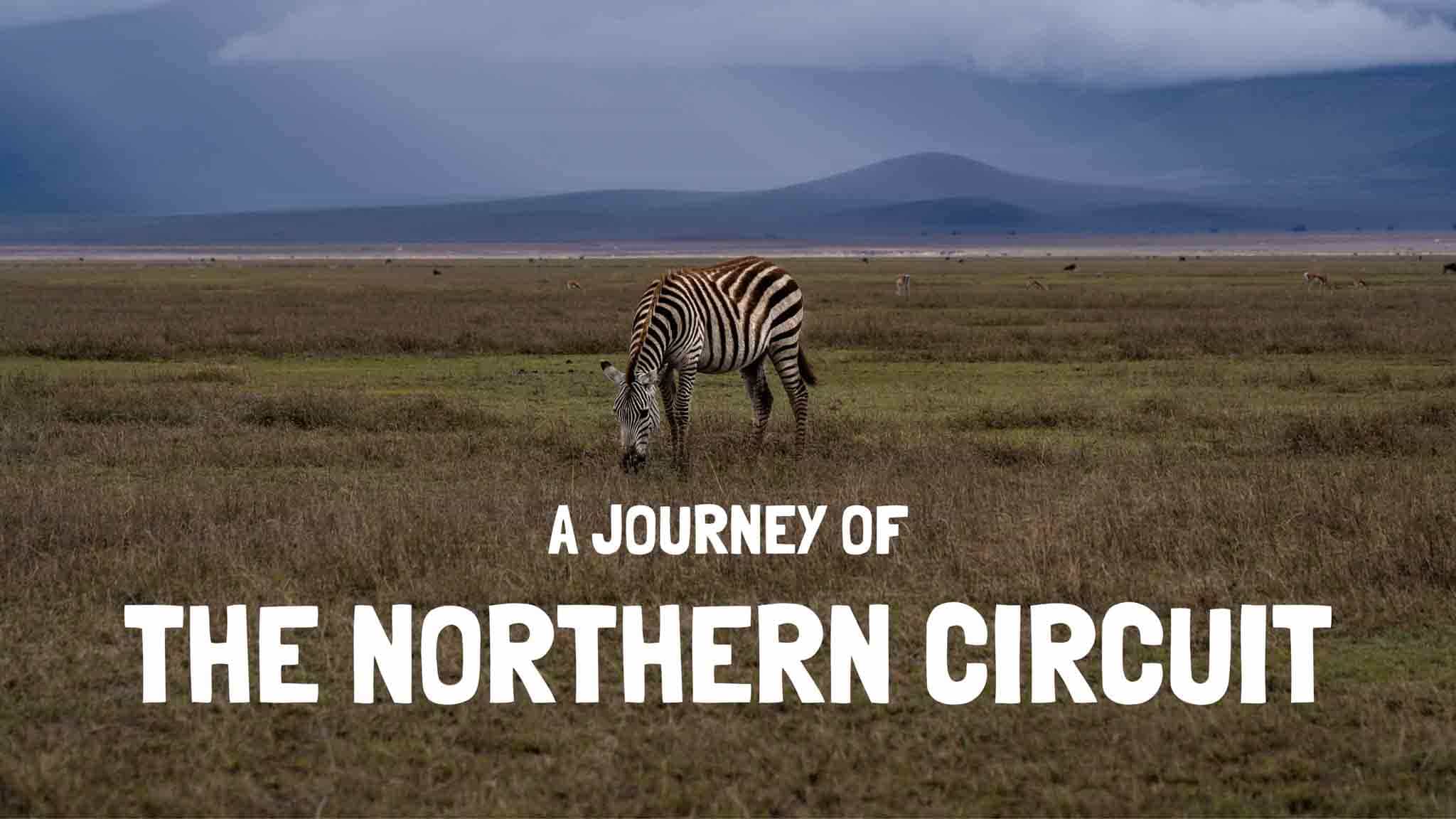
In northern Tanzania, high-season prices usually continue until the second week of March due to the better weather, so early-month safaris have higher pricing. Many camps in southern Tanzania will even close mid-March, but in the north most will stay open. We therefore recommend a safari in the northern circuit to secure the best accommodations. However, we do still suggest booking 6 months in advance to get the best deals.
March also has fewer visitors than during the high seasons. This means that March offers a quieter, more personal experience, which is perfect for travelers who value space and calm.
March calls for light, breathable clothing that can handle warmth and rain. We recommend bringing a light rain jacket and quick-dry or waterproof shoes. We also recommend bringing sun protection, like a hat.
Just keep in mind: more rain means more mosquitoes. Wearing long sleeves and pants will help prevent bites.
March offers lush landscapes, birdlife, and fewer tourists. For those willing to trade a few muddy tracks for quiet parks and dramatic scenery, March in Tanzania is full of adventure!
Do you have questions about a safari to Tanzania? We’re happy to help! From practical tips to activity recommendations. Below, you’ll find answers to frequently asked questions to ensure a smooth and unforgettable journey.
If you can’t find your answer here, don’t hesitate to contact us directly. We’re here to assist you!